Showing posts with label Outside. Show all posts

Tuesday, August 26, 2014

The Reformation of the Orlick Goblins of Atmos


So legend goes, the Goblin race was born of a contradiction. Graak forged the Goblins from fire and darkness, law and chaos, a cacophony of screams and absolute silence.  

The goblins grew quickly, not only numerically but technologically. The human tribes that occupied the coastal regions of the island of Atmos co-existed peacefully with the goblins initially, until the expansion of both cultures began to cause tension. Both cultures traded with the orcs that sailed the great oceans. The Orlick Empire, as the goblins styled their disparate holdings, grew rich and decadent based on the commands Graak issued his spawn: Build empires, accumulate wealth and power, enslave and exploit the weak.

Despite calling themselves an empire, the Orlick goblins were anything but. With no central government, ruler or bureaucracy even calling it a kingdom would be a stretch. This changed as conflict erupted with the humans downriver. On the island, huge amounts of rain fall on the western mountains, but very little on the side of the island that is habitable. Both the goblins and humans depended on the rivers and lakes that flow from the western mountains to the ocean so when the goblins began to dam the rivers, war erupted soon after. This created a problem for the Orlick goblins as their human foes were vastly more organised despite being technologically inferior. An accord was reached whereby each landed goblin would provide troops and supplies to the newly formed army. Until the Reformation, this military structure was as much government and bureaucracy as the goblins would need at a national level.   

A decade after contact with Nocte, an aristocrat named Klaas took the typical cruelty of the Atmos goblins a step too far. His slaves which numbered in the thousands by and large worked in despicable conditions in the coal mines of Gildenof. Goblin and human slaves permanently shackled together worked 18 hour days without break, slaves were expected to eat, drink and crap on the go. If a slave collapsed or died they weren't removed until sleep time. This changed when a friend of Klass visited the mines and was horrified by what he saw. The friend, Unger, did own slaves and no one could have accused him of kindness toward them, but it is certainly true that something changed in him when Unger visited the Gildenof mines.

Since almost the beginning of time, there had been 'defective' goblins who rejected Graak and his cruelty, small cells of resistance occasionally sprung up but amounted to nothing. Unger became one of these defectives when he visited the mine and saw the atrocities his friend committed upon his slaves. Returning home, Unger sold his slaves and assets. With the proceeds he began a campaign with the stated aim of freeing the goblins from the hatred and cruelty that bound them. Unger's earliest attempts were met with ridicule, then mounting derision as people realised he was serious. Despite several early assassination attempts Unger's movement spread openly. Goblin society, despite its political and social machinations, did not really know what to do with a movement so ideologically different from mainstream society and lacked the governmental structures to deal with it. In a society with few laws but a massive bureaucracy, a strong military but one entirely engaged in the constant warring with the Arant humans downriver, the Goblin Temperance League (as they became to be known) was able to grow relatively unchecked. Early growth was driven mainly by Edda, a rich merchant who had quietly been building her own network of goblins that sympathized with Unger’s cause. She built her business as a trader in seeds and dyes her fortune came from her second concern, the largest network of messengers in Orlick. These messengers allowed her to deliver the revolutionary message across the empire and also hinder the communications of her rivals such as the priesthood.

The Priests of Graak, did see the threat of the Goblin Temperance League but the many factions were too fragmented and unwilling to join forces. Their communications and attempts at organisation had previously not come to much and with Edda’s runner network able to disrupt their attempts at organisation, each faction was simply too small to pose a threat to the League. Still, many key figures were assassinated by the priesthood. Unger survived many attempts however, and his followers built his image to that of a saviour of the entire goblin race.

In the end, it was Klass, Ungers' friend who made the movements victory assured. He made a martyr of Ungers by personally striking him down while Ungers was giving a speech on morality to over ten thousand goblins. The news spread like lightning. Assassination was not uncommon in goblin society but Unger was different. His death sparked a violent uprising of millions of slaves and free goblins that gradually overthrew the priests of Graak, powerful opposing goblins and what little there was of the military left in the empire. The buildup of mostly non-violent speeches, influence building and moralising happened quickly, over the space of five years the goblin society transitioned from one that had no comprehension of morality, to one where such a discussion was possible. The violence triggered by Unger’s death would last for over a decade. During this period tens of thousands of goblins fled through the portal to the world beyond and many even settled in Nocte. The Reformation, bloody though it was remained committed to basic freedoms and rights for all goblins, basing many of their new ideas on the orcs they traded with and the humans they met through the portal. The orcs democratically elected a captain and leader of their ships so the goblins modelled their own new government after the orcish custom.

Although the early democratic experiments of the goblins were wildly inequitable, despotic at times and at best chaotic, it had its own influence on the city. The refugees that settled in the city quickly became foundational members of the blossoming guilds of the city. Many of the rituals and organizational structures of today’s guilds have their origin in these early Orlicken experiments in democracy.

A goblin today will speak of a new age of goblin enlightenment. The goblin race has transcended its origins as the spawn of an evil deity. Of course, centuries of cultural conditioning are difficult to overcome, many underground cults still exist that worship Graak and his servants. The city its self is not a utopia. Massive cruelty, inequality and poverty exist, but at least the goblins believe that all is not right and strive to improve the world around them.


Tuesday, July 8, 2014

The Halflings of Blonks


Blonks is one of the many Dukedoms formed in the Sutland after the fall of the Tikreti Empire. On its collapse, over 300 years ago, Blonks was formed from one of the Duchies of the Empire.


300 years ago, the relatively unmolested halflings of Blonks were conquered by the Tikreti Empire. Empyric practices at the time were to appoint a local related to the previous system to govern and so a halfling was appointed the first Duke of Blonks. Under the duke, three barons were each appointed a portion of the dukedom. A century later the empire falls but the Duchies under it remain. The former empire splits into thousands of independent realms, some fell to conquerors, others saw sense to ally with their neighbors to form new kingdoms. The disparate groups of the Barden plains and Stallem hill valleys that form the Sutland mostly remained small and independent.


Life ruled by nobles never really suited the halfling way of life, theirs being a much more equitable and equal society than existed in most other places in the empire. For this reason, the dukes and barons that rule are mostly ignored by the majority of halflings. Their tithes are small and the barons know not to push too hard, else they find themselves completely ostracised from Blonkian society. This society is almost entirely made up of small hamlets and villages, consisting of very few large (albeit low ceilinged) communal living huts surrounding a Home Hearth of Anwyn. All food preparation and consumption is done within the Home Hearth, as well as being the common gathering place and workspace for the village. The huts surrounding the home hearths are also communal space, up to twenty people will live in a hut that has no internal walls or separations of any kind.


Halflings are not private people at all, their communal living prevents it, to extremes that other cultures may be shocked by. A Blonkian will happily defecate in front of people, as well as fornicate. Although halflings are mainly monogamous, the participants, nor or any onlookers would feel slightly uncomfortable engaging in sex in a communal sleeping area. Pre-marital sex is not uncommon, the older folk just smile at the youths and their emotions, knowing that soon they will be adults and ready for marriage. Children are brought up communally and although a child will know who their parents are, no particular affection or attachment is normal in Blonkian society.


A typical village will be surrounded by many wind chimes and other noise making paraphernalia. Loud instruments and many bodies close together keep away Malkalin, the dark stalker. A god of darkness that takes lone halflings at night, Malkalin also has influence in The city in Darkness. Halflings in the city do not live communally and there is some debate as to whether this has drawn Malkalin to the city.


The head of the village is a member of a mystery cult of Yashan. Although they still live communally, only the heads of villages and their eventual replacement are indoctrinated into the Yashani (as they are known). The followers of Yashan meet secretly every full moon to discuss leadership, perform protective rituals over the villages of Blonks and make the sacrifices Yashan demands for his protection. At every meeting, an animal born since the last full moon is sacrificed.

Tuesday, June 10, 2014

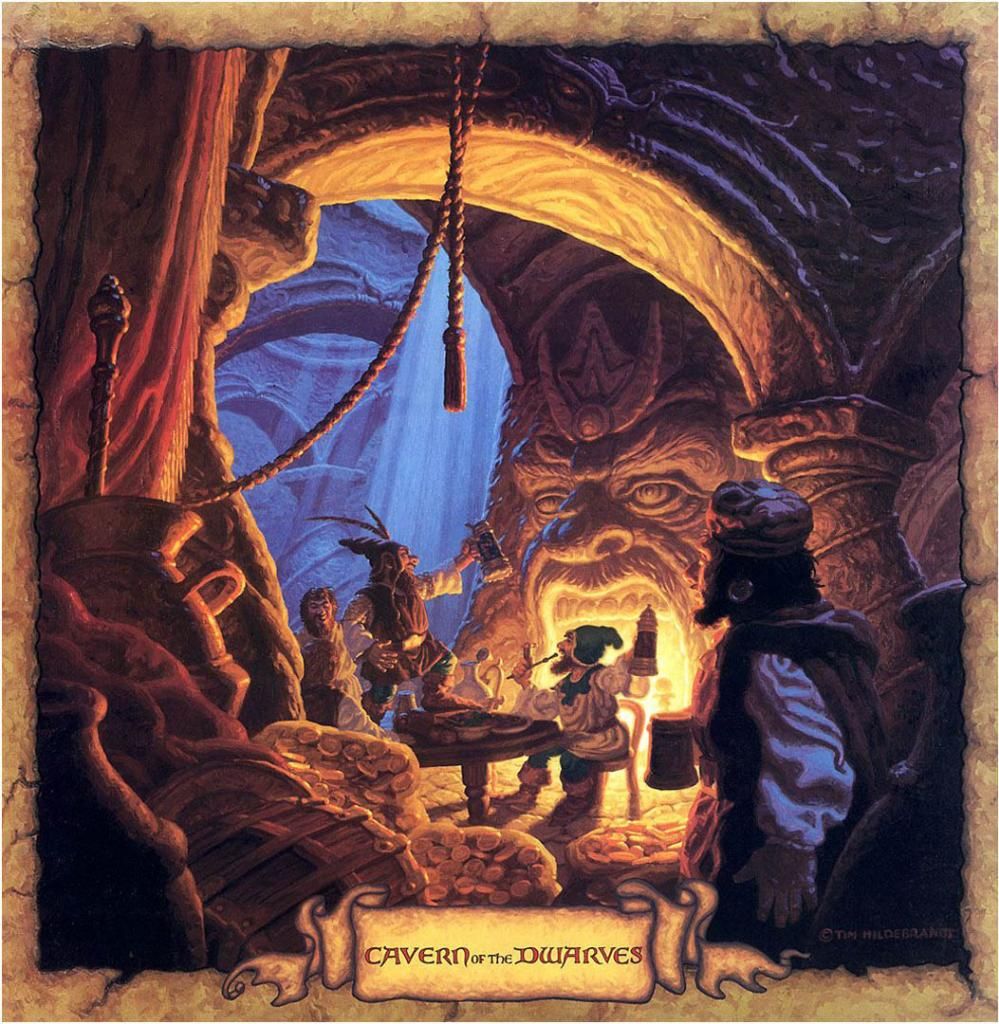
The Dwarves of Csarnok


Far beyond the plains of Blonks and it's surrounds near the source of the river Skoll lies the mountainhomes of the Csarnok dwarves. Once a mighty empire that spanned the Hegek mountains that form the spine of the known world, they are now a dying race, fractured and defeated.

No war brought the Dwarves low, no famine nor pestilence, yet brought low they were. No baby has been born in the mountainhomes for a century and their halls echo emptily. The dwarves left their mines, crafthalls and smithies and fell into a maliase. Now they barely speak to each other, most of the time they can be found sitting staring at nothing. With no new produce, the dwarves barter away their heirlooms and prized possessions in exchange for the minimal food they need to survive. The dwarves don't even particularly seem interested in that survival, a fact that various monstrous races have used to their advantage. The dwarven Csarnok populations have halved in a century, no new babies have been born in that time. Old age and one-sided conflict have hastened the dwarves demise.

The dwarves of the city of darkness talk often of this maliase as they are seemingly unaffected. In fact, almost none of the dwarves who have left the mountainhomes are similarly afflicted. Some of these dwarves attempt "rescue missions" back to the mountainholmes but almost all are failures; the rescuers either falll into the depression of their intended rescuees and never leave the mountains, or return unsuccessful. One successful expedition was mounted recently however, led by Butusov Feargehar. He and 12 other dwarves ventured to Crajeholde and brought back almost 50 fellow dwarves. In their words, they felt "a great weight lifted from my shoulders, something in those halls is pushing the dwarves down and I for one, will never go back to the accursed mountainhomes."

The successful foray by Butusov Feargehar has inspired massive enthusiasm for the "plight" of the dwarves. Charities have sprung up founded by poor and wealthy dwarves alike. Posters adourn every wall advertising rallies for the dwarves as well as new charities and charitable organisations.

As yet unnoticed by the dwarves of the city, they too are affected by this curse, their productivity is slowing and the quality of the work they do is declining. They may survive another century, or another millenia; only time will tell.


Thursday, March 20, 2014

Through the Portals


There are a small number of stable, and an indeterminate amount of unstable portals in the vicinity of the rock.

The original portal discovered by Thenim Baytree opens onto a seemingly endless plain of tuberous vegetables and lazy brown rivers. Strings of towns line the rivers leading to cities at the foot of a vast mountain chain that spans the continent.  Barges ply the sluggish rivers and quite a port has sprung up a day's wagon ride from the portal, transporting goods to the city. Shanty towns often spring up outside the portal but marshals of the duke regularly destroy these illegal settlements as they provide no tax income. Although deaths are rare, the marshals are ruthless in their destruction, burning the buildings to the ground. The region around the portal is known as Blonks, populated by small farming communities of Halflings

Far to the south of the Blonks portal, on a large island, lies the goblin portal. Buried underground, in close proximity to the large goblin city of Weinhold. The portal opens above a roaring torrent that forms one of the many underground rivers that power the goblins technology. This watercourse is also the source of the city's water. A stone aqueduct begins here, carrying water to the city and its inhabitants. Beyond the great cities and dams of the goblins, lies the human realm of Trinnidin, a stern folk in constant conflict with the goblins over their practices of damming the rivers the Trinnidin use to irrigate their lands.

Only three portals are in constant, public use on the rock, and the final one leads to the swamps of Kohlness. The Kobolds of Kohlness had a mixed reaction to contact through the portal as they had previously been isolated in the swamps. It didn't take long for many tribes to start trading fish and herbs to the newcomers. Nowadays trade has civilised many Kobold tribes and trade routes have been even been forged through the swamp to the elven nation of Faireshade.
  
There are other portals of course;

  •  Odeosa Fhrambrey has a portal to a micro world where he attempts experiments in cross breeding sentient species.
  •  The Siren’s portal is permenantly barred. Massive chains and bars prevent anyone from entering the portal. No amount of barriers can prevent the hauntingly beautful songs issuing from the portal, passers by have been known to stop and listen for hours.
  • The serene portal is seen only as bright green and blue disc, about 300 meters off the edge of the rock. A few mages and spelunkers have succeeded in reaching the portal, but none will report what they found.
  •  Occasionally small portals open on the rock, most seem to lead nowhere but rarely, other worlds can be glimpsed through the portals. It is rarer still that someone returns after entering such portals.